Basement Gym Design Ideas
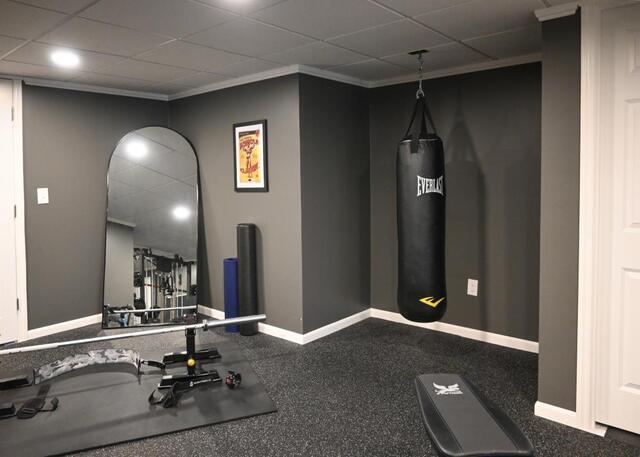
When you picture a basement gym, an image of a concrete floor and a dangling single lightbulb flickering above an elliptical might come to mind. While this is one of your options, I urge you to set that image aside for this conversation. A basement gym doesn’t have to feel like a forgotten corner of the house. With the right design choices, it can feel just as motivating and intentional as a boutique fitness studio. Here are a few important design and layout tips for your home gym.
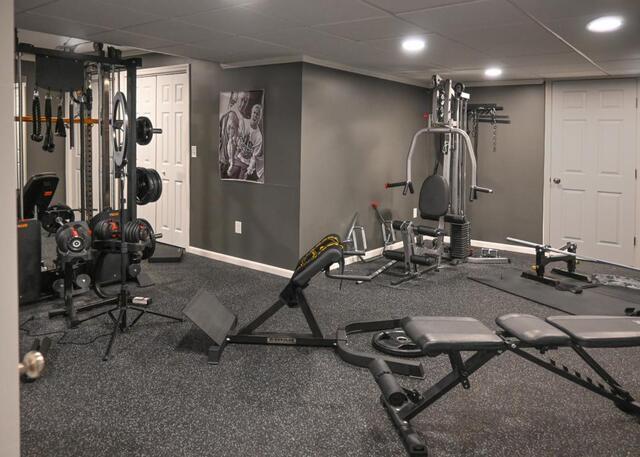
Luckily, a few of the big-ticket items you have to consider when finishing your basement also help create a good environment for a home gym. Things like moisture control, lighting, and layout aren’t just construction details. They directly impact how comfortable and usable the space feels when you’re in the middle of a workout.
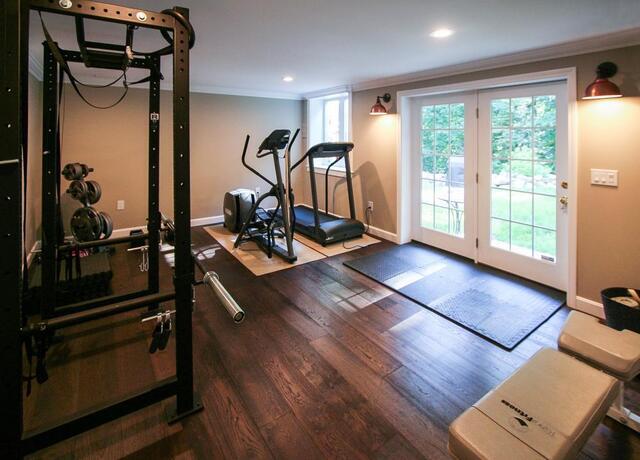
Flooring, For Example…
It’s recommended that wood flooring be avoided in basement design due to the environment's natural moisture and humidity. Luxury vinyl plank, like Elite plank flooring, is a good alternative that will last longer and won’t need to be replaced if a pipe bursts. It also handles dropped weights and heavy equipment better than many traditional surfaces.
For higher-impact workouts, you may want to layer in rubber flooring or gym tiles in specific zones. This protects your subfloor, reduces noise for the rest of the house, and gives you the kind of grip and cushioning you’d expect in a commercial gym.
For more serious athletes…
One feature many home gyms miss that all typical gyms have is mirrors. Mirrors aren’t all for vanity. They’re invaluable for maintaining good form and preventing injury. A well-placed mirror can also make the room feel larger and brighter, especially in a basement where natural light is limited.
Think beyond a single small mirror. A full wall mirror or a long horizontal run gives you visibility for multiple movements — lifting, stretching, or mobility work — and makes the space feel intentionally designed. Make sure you keep in mind where a mirror may fit best (and communicate with your designer).
Don’t forget the height…
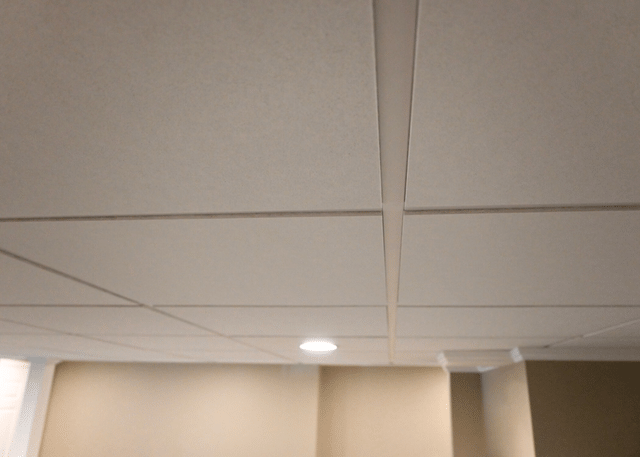
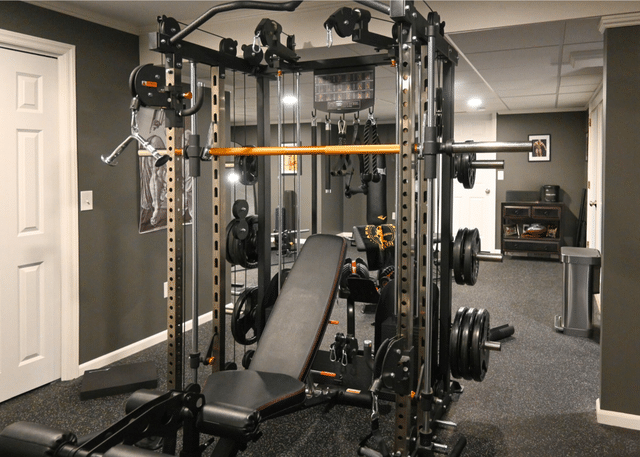
Basements, especially older ones that are commonly found in New England homes, often lack height. Finishing an eight-foot ceiling can make it an even tighter fit. Make sure you’re keeping in mind the height requirements for your largest piece of equipment and for your body in motion.
Treadmills, squat racks, pull-up bars, and overhead presses all demand vertical clearance. Even ceiling fans or hanging lights can become obstacles if they’re not planned around your workout zone. In tighter spaces, thoughtful equipment selection and ceiling design can prevent the room from feeling cramped.
Airflow and comfort matter…
A basement gym should feel fresh, not stuffy. Proper ventilation, dehumidification, and temperature control keep the space comfortable year-round. A dedicated dehumidifier helps protect your finishes and just makes the room more enjoyable to be in.
Whatever your fitness goals are, the right design can turn unused space into a gym you’ll actually want to use. A thoughtfully finished basement gym isn’t just convenient. It’s also an investment in your health, your routine, and your home’s value. If you’re ready to create a space tailored to the way you move, our team is here to help bring it to life.
